Skip to content

New: design your insert yourself, in 2D and 3D, with live pricingDiscover the editor

SMED · Changeovers

Custom foam SMED kits

One kit per changeover, with tools and parts stored in the order they are used. It is prepared and checked while the machine is running: during the stop, the operator no longer searches for anything.

The SMED method

Prepare before the stop, not during it.

SMED (Single Minute Exchange of Die) cuts downtime during a changeover: everything that can be prepared is done while the machine is running. A kit is its simplest tool.

  1. Step 1

    One kit per changeover

    Only the tools, shims and fixtures needed for that changeover.

  2. Step 2

    In order of use

    The step number is engraved next to each pocket: the kit reads like a checklist.

  3. Step 3

    Checked before the stop

    An empty pocket is visible: an incomplete kit is spotted before the machine stops.

  4. Step 4

    A colour code

    One base colour per format or per machine avoids picking the wrong kit.

Understanding SMED

SMED, explained simply.

What SMED stands for, the distinction that changes everything between internal and external operations, the steps of the method, and the role of a changeover kit.

Chapter 1

Where SMED comes from

SMED stands for Single Minute Exchange of Die: changing tooling in a single-digit number of minutes, in other words in under ten minutes. The method was formalised by Japanese engineer Shigeo Shingo, notably at Toyota, from the 1950s and 1960s.

At the time, changing a press die could take hours. By reorganising the changeover rather than buying machines, Shingo brought it down to a few minutes. The principle now applies to any changeover: machining centre, press, packaging line, injection moulding machine.
Chapter 2

Internal and external operations

This is the core distinction of the method. An internal operation can only be done with the machine stopped: removing a jaw, changing a tool, setting a stop. An external operation can be done while the machine runs: fetching the tools, preparing format parts, checking that nothing is missing.

In an unprepared changeover, much of the downtime is actually external work done at the wrong time: the machine is stopped, then someone goes off to look for the spanner, the shim, the jig.

Chapter 3

The steps of the method

  • Observe: Film a real changeover, from the last good part to the first good part of the next batch, and list every operation with its duration.
  • Separate: Classify each operation as internal or external.
  • Convert: Move everything possible to external: tool preparation, presetting, preheating, checks.
  • Streamline: Reduce what remains internal: quick clamps, no more trial-and-error adjustments, operations done in parallel by two people.
  • Standardise: Write down the new sequence and train people on it, so every team changes over the same way.

Chapter 4

Why it pays off

Every minute saved on a changeover is an extra minute of production, at every changeover. The calculation is simple: minutes saved × changeovers per week × working weeks.

SMED also has a less visible effect: when changing over becomes quick, you can run smaller batches, reduce stock and respond faster to orders. It directly improves availability, one of the three factors of OEE (overall equipment effectiveness).

Chapter 5

Designing a good changeover kit

  • One kit per changeover, or per format, rather than a box shared by all machines.
  • Tools and parts in order of use, with the step number engraved next to each pocket.
  • Format parts (jaws, jigs, shims) and changeover consumables, not just the tools.
  • A colour code per machine or per format, so the wrong kit is never picked.
  • A check that the kit is complete before the stop: an empty pocket shows immediately.
  • A fixed location next to the machine, on a trolley or in a cabinet.

What you get

An insert designed for the workstation.

  • Tools and parts in order of use
  • Step number engraved next to each pocket
  • Colour code per format or per machine
  • One kit reproduced for several identical machines
  • Dimensioned drawings and quote within 2 working days, production in 5 working days after proof approval
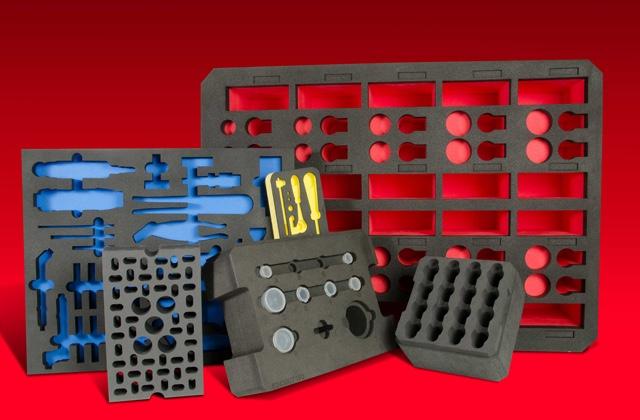
Several black foam inserts with a coloured base (red, blue, yellow), cut for tools, bottles and parts.

To get started

What we need.

The configurator asks for this information in order. You can save and come back later.

  1. 01The machine and the format or batch changeover concerned
  2. 02The list of tools and parts, step by step
  3. 033D files of the fixtures, or a photo on the A4 template
  4. 04The colour code you want per format or per machine

What you gain

Estimate it with your own figures.

No gain is promised: replace the values with those of your workshop.

SMED · Changeovers

Machine downtime minutes

= 31 production hours per year

Example values: replace them with your own. The kit prepares the tooling before the stop, in step order, instead of searching for it during the stop.

Several black foam inserts with a coloured base (red, blue, yellow), cut for tools, bottles and parts.
Black foam on a coloured base: red, blue, yellow or grey to match your codes.

Materials and options

Workshop foam, not packaging foam.

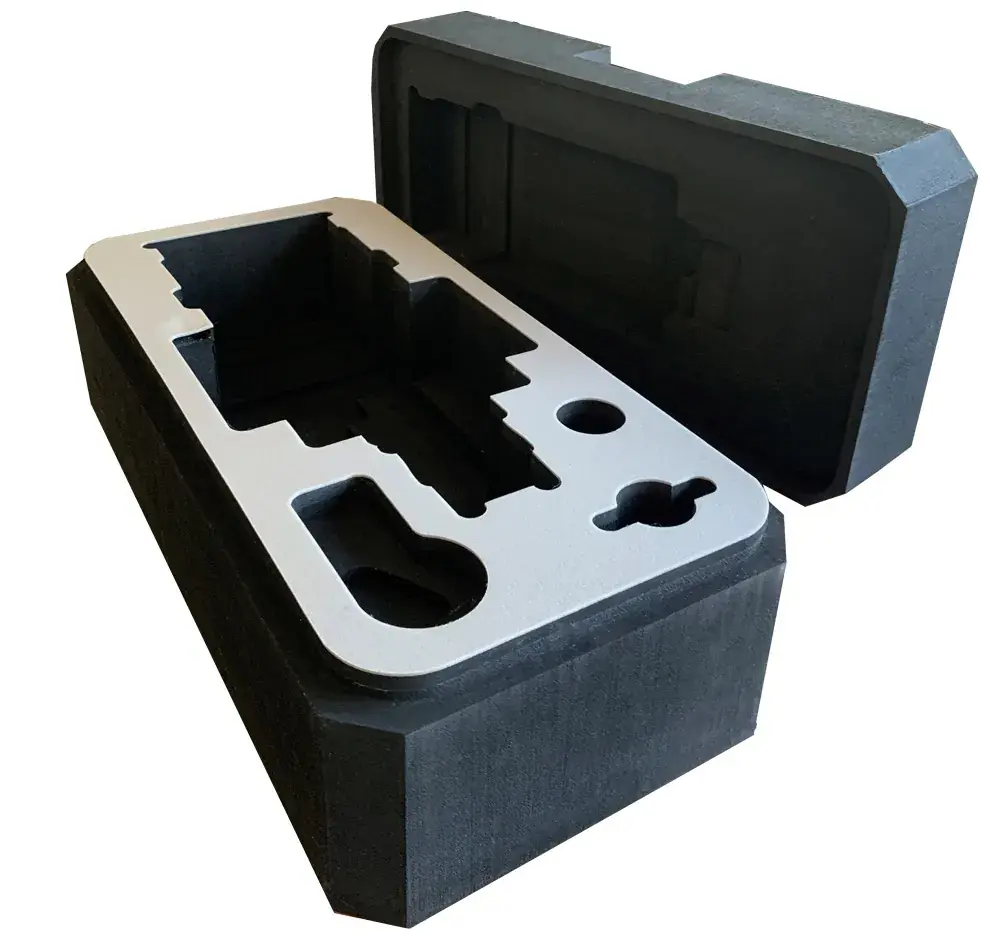
  • Black LD29 cross-linked PE

    Standard: rigid, does not crumble, easy to clean

    included

  • LD45 · EVA · ESD

    Heavy tools, premium finish, electronics (ESD on request)

    on quotation

  • Two-colour base

    Visual check of the missing tool

    +15 €

  • Engraving

    Tool name, SMED step number, reference

    +10 € / insert

  • Thicknesses

    5, 10, 30 and 50 mm sheets, combined to suit the height of the parts

    calculated

How it works

From your file to a fitted-out trolley, in five steps.

Nothing is made without your approval of the quote, then of the proof.

  1. Step 1 : Describe the project

    Stations, drawers or cases, then your parts: 3D file, photo on the A4 template or dimensions.

    online, no account

  2. Step 2 : Review and quote

    Every insert is checked. You receive dimensioned drawings and a quote in your customer area.

    2 working days

  3. Step 3 : Acceptance

    You accept the quote online: name, consent box, date and time.

    online

  4. Step 4 : Proof

    You approve the final drawing of each insert before machining.

    at your own pace

  5. Step 5 : Production and shipping

    Machining, inspection, tracked shipping.

    5 working days

Frequently asked questions

Your questions.

What is SMED?

A Lean method that reduces a machine's changeover time: everything that can be prepared in advance is done while the machine is running.

How many kits do I need?

One kit per machine and per changeover family. If several machines use the same tools, a single drawing is enough: the kit is reproduced identically.

What can be engraved?

The step number, the tool name, the machine reference, the kit number or a tightening torque. Engraving 6 mm high, sans-serif font.

Which files can I send?

STL or STEP for 3D parts, DXF or a dimensioned PDF for an outline. Without a 3D file, a photo of the parts laid flat on our printed A4 template is enough, together with their height.

Other solutions

The same workshop, other uses.

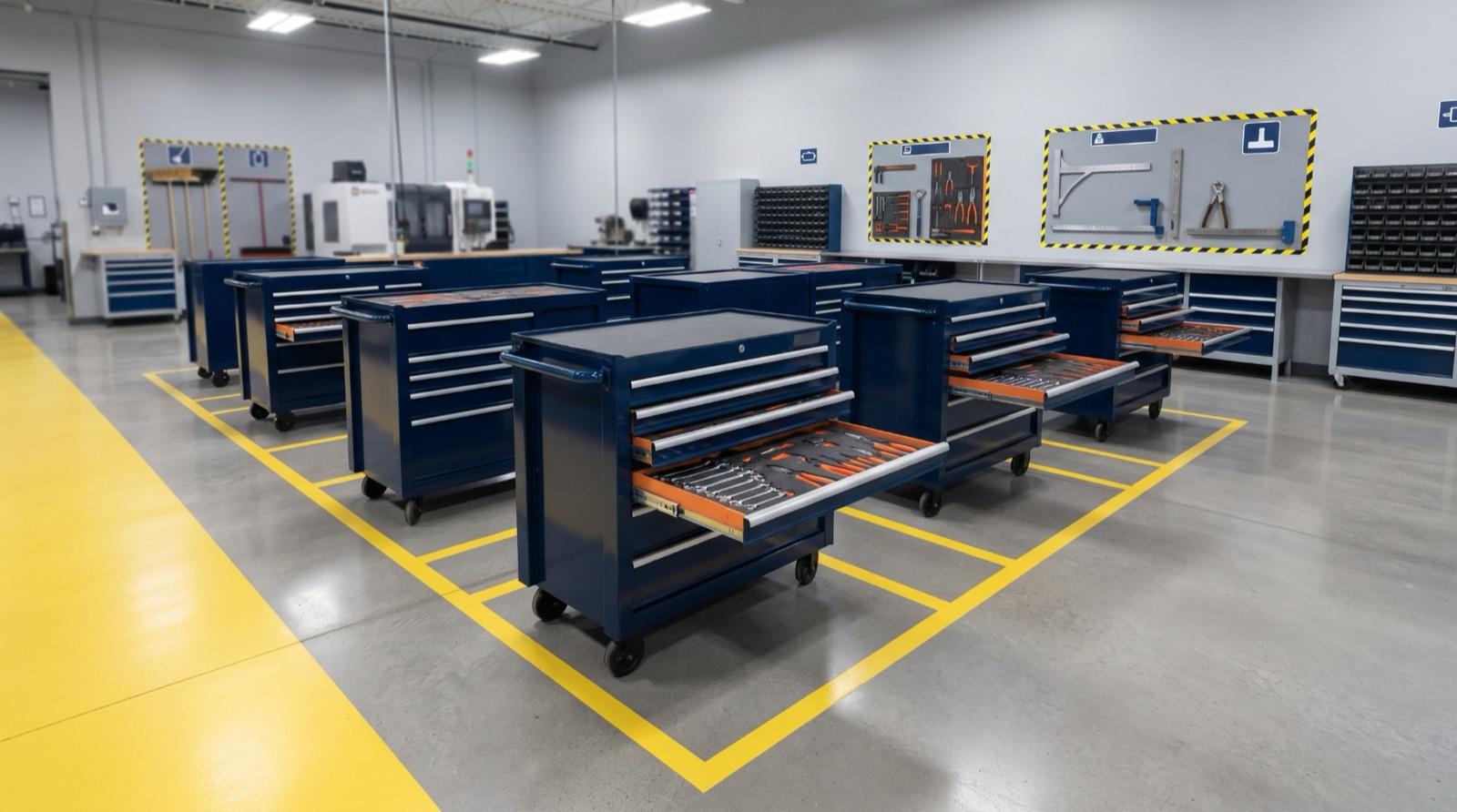
  • 5S · Workshop tool trolleys

    5S and tool trolleys

    • One insert per drawer, two-colour base by default
    • The name of each tool engraved next to its pocket
    • One drawer reproduced in all identical trolleys
  • Cases · Metrology

    Cases

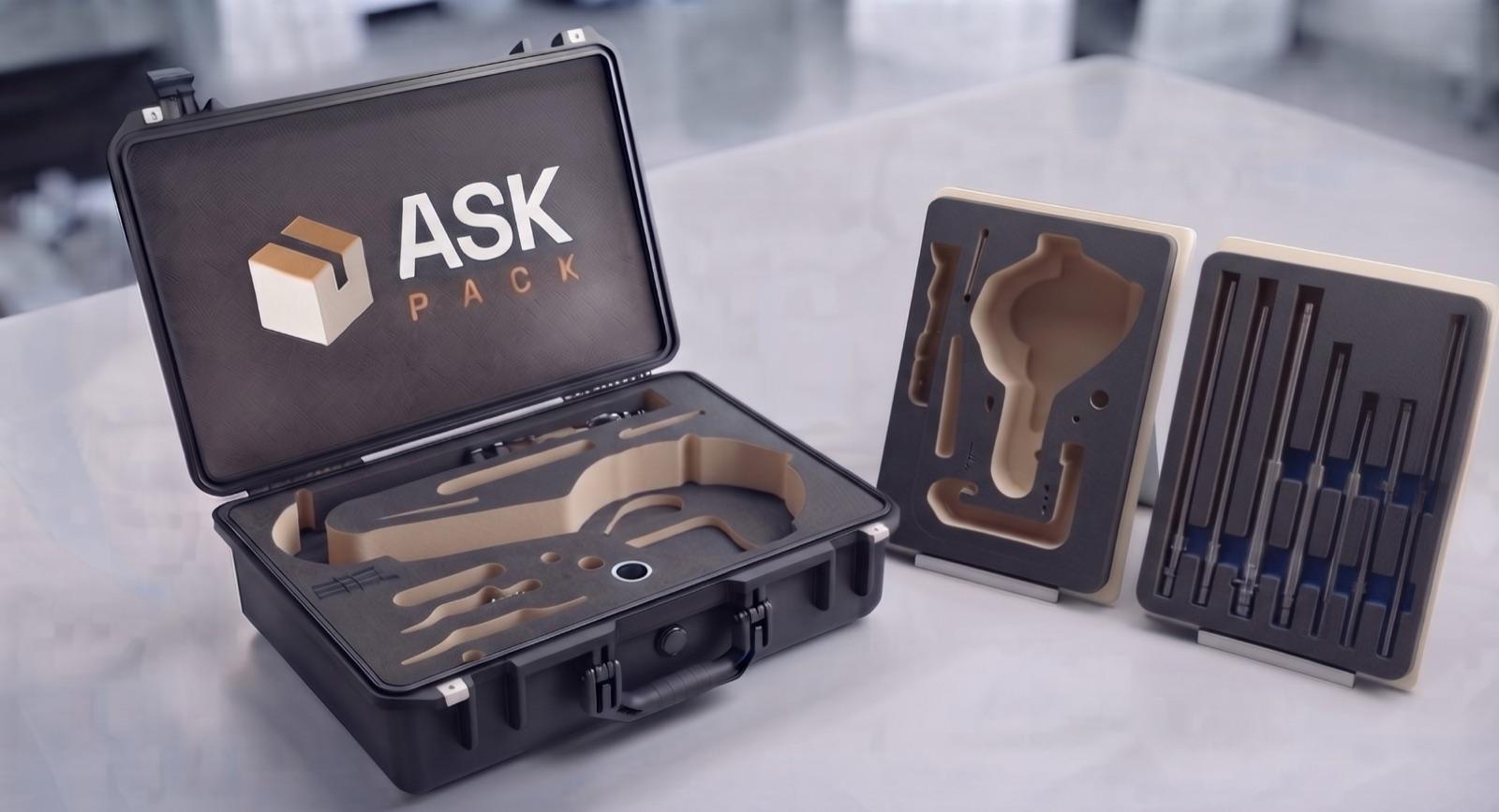
    • Known cases: Peli 1200 to 1610, Explorer Cases on request
    • Or the internal dimensions of your own case or box
    • Several layers for tall parts
  • Packaging · Machined parts

    Protective packaging

    • Pocket calculated from your STEP or STL
    • Standard dimensioned drawing of each insert before production
    • From prototype to series, drawings kept for repeat orders

Describe your first station. The rest follows.

Start without an account: your project is saved as a draft at every step.

  • Standard dimensioned drawings for every insert
  • Quote reviewed by hand, never sent automatically
  • Nothing is machined without your approved proof

Sign up for our newsletter

News, technical guides and workshop insights, at most once a month.